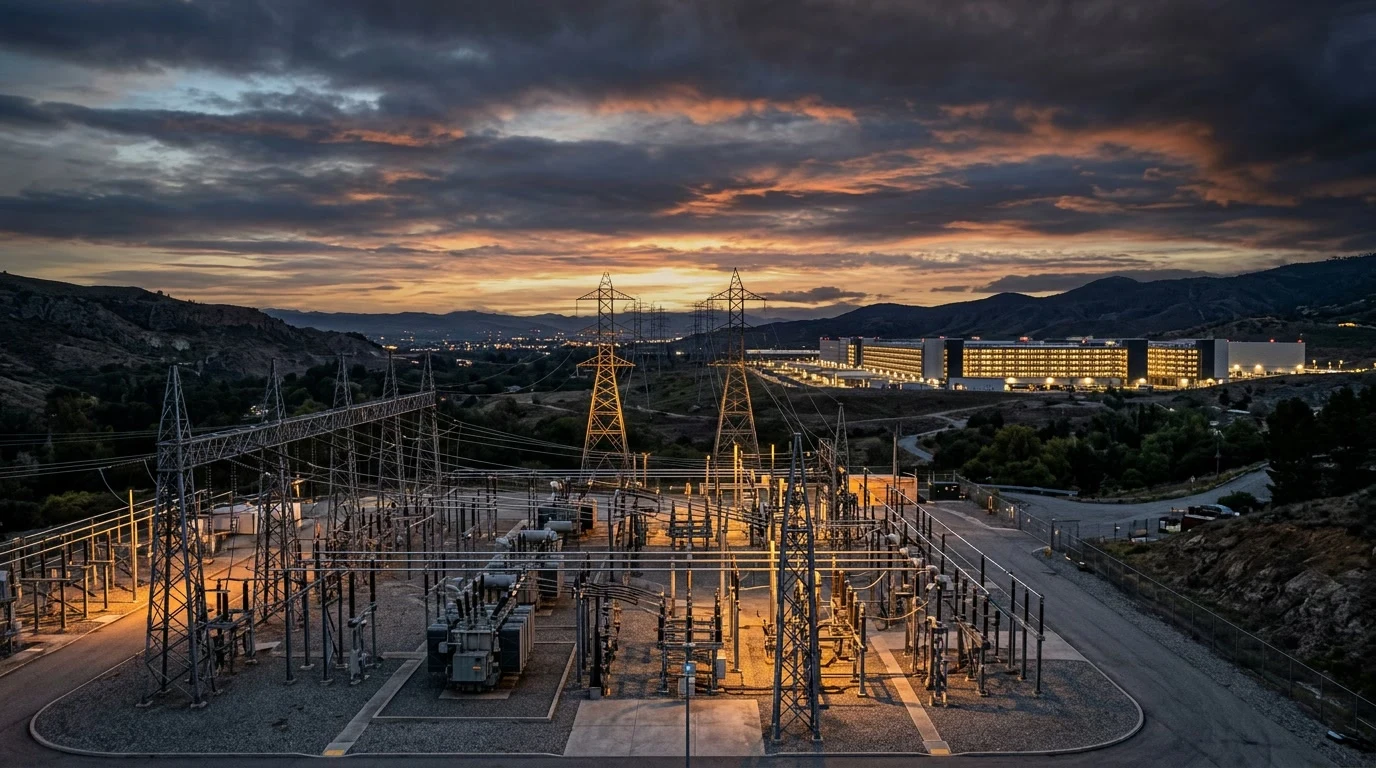
Data centers accounted for $6.5 billion, or 40%, of the $16.4 billion in costs from PJM Interconnection's capacity auction covering the 2027/2028 delivery year, according to a January 5, 2026 report from Monitoring Analytics, the grid operator's Independent Market Monitor. Utility stocks have repriced accordingly. Whether the load behind those numbers actually shows up is the question the market has not yet had to answer.
How Much Of The Bill Traces To Data Centers?
Most of it is speculative. Monitoring Analytics found that $6.2 billion of the $6.5 billion in data-center-linked costs relates to facilities that have not been built, and that data-center forecasts made up 45% of the $47.2 billion in capacity costs across PJM's last three auctions combined. The monitor's own language is blunt: the results reflect "extreme uncertainty in the load forecasts based on uncertainty about the addition of large data center loads," a caveat that applies to a market covering 65 million people across 13 states and the District of Columbia.PJM's most recent auction, for the 2028/2029 delivery year, cleared at $325 per megawatt-day of unforced capacity, a 2.5% decrease from the prior year's price cap of $333.44, PJM said in a July 14, 2026 release. That auction procured 138,318 megawatts of generation, plus 10,864 megawatts from fixed-resource-requirement zones, for a combined 149,182 megawatts — 6,831 megawatts short of PJM's reliability requirement. PJM called it the first auction in its history in which the entire footprint fell short of that target, attributing part of the gap to "the continued trend of the addition of large data center loads to the load forecast," which pushed the forecasted peak roughly 2,000 megawatts higher than the year before.
Are Utility Earnings Actually Catching Up?
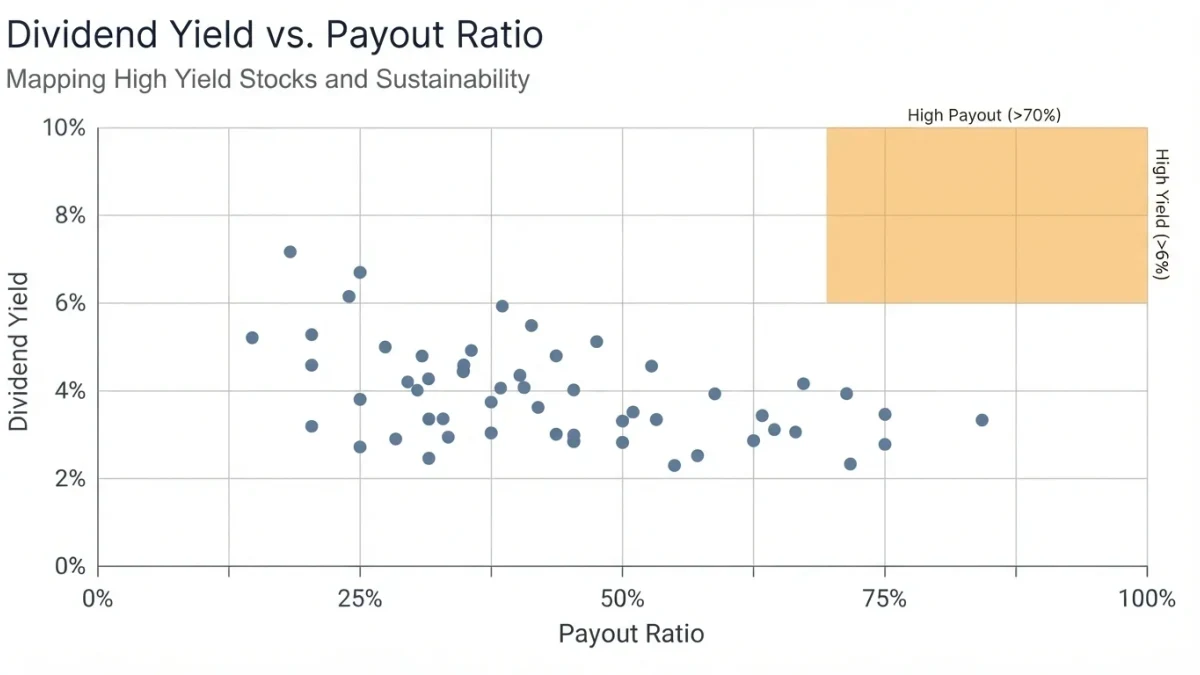
Capital budgets have moved first. Utilities are expected to spend roughly $240 billion in 2026 to meet AI-driven demand, according to a Motley Fool analysis published July 4, 2026, which also noted that U.S. electricity demand grew only about 10% between 2005 and 2025 after decades near flat — and is now projected to grow roughly 60% between 2025 and 2045. American Electric Power has committed to $78 billion of infrastructure investment from 2026 through 2030 tied substantially to data-center connections, with average annual earnings growth guided near 9% through 2030, Fortune reported August 11, 2026. Morningstar utilities analyst Andrew Bischof told Fortune that "you're now seeing more growth-oriented investors coming to utilities because they can provide that six to eight and sometimes 10% annualized growth over the five-year forecast" — a framing that would have sounded odd applied to the sector before the AI buildout began.The re-rating shows up in individual names, with the caveat that these are point-in-time snapshots rather than durable levels. As of the Fool's July 4, 2026 analysis, NextEra Energy traded at a forward price-to-earnings ratio of roughly 22.5 times, below its five-year average of about 27 times, with a 2.77% dividend yield against roughly 9% expected annual earnings growth and 6% expected dividend growth. Bloom Energy, a fuel-cell maker selling directly into data-center power needs, had risen more than 1,000% over the prior year as of that same date, carrying a $6 billion fuel-cell backlog — 2.5 times larger year over year — within a total backlog of $20 billion, against a price-to-sales ratio near 29 times.